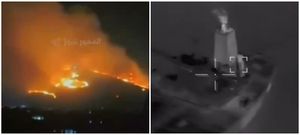
A Ukrainian drone attack has hit a convoy of Russian trucks on the land corridor connecting Russia to occupied Crimea, according to footage posted on social media.
The incident occurred near the Chongar checkpoint, on the Russian federal highway R-280 "Novorossiya", one of the main supply routes to the Crimean peninsula.
The released footage shows a powerful explosion hitting several vehicles used by Russian forces. No details have been released about the damage or casualties from this attack.
This attack comes at a time when Russian authorities continue to conduct lengthy vehicle checks at entry and exit points of occupied Crimea.
These checks have caused long traffic columns, creating situations that, according to the Ukrainian side, make vehicles easier targets for drone attacks.
The land corridor to Crimea is an important logistical artery for Russian forces, especially for supplies and the movement of military equipment. /Telegraph/
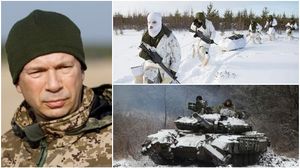
Ukrainian President Volodymyr Zelensky has dismissed the commander-in-chief of the Armed Forces of Ukraine, Oleksandr Syrskyi, appointing the current commander of the United Forces, Mykhailo Drapatyi, to this post.
Zelensky announced that the decision was made as part of the restructuring of the Ukrainian military leadership.
He said that, together with Mykhailo Drapatyi, Yevhen Hmara and Pavlo Palisa, the way in which the structure of the General Staff of the Armed Forces of Ukraine should be reorganized has been determined.
The Ukrainian President praised the work of Oleksandr Syrskyi, emphasizing that he has achieved significant results during the defense of Kiev, the counteroffensive in the Kharkiv region, and the operation in the Kursk region.
"Ukraine has come a long way. The defense of Ukraine continues, and every soldier must be treated with dignity. I am grateful to Oleksandr Syrskyi and every one of our soldiers that Ukraine continues to hold strong positions on the battlefield," Zelensky declared.
The Ukrainian leader added that Mykhailo Drapatyi shares the same vision for the future of the Ukrainian army.
Zelensky also announced that he has held talks with Oleksandr Syrskyi and Andrii Hnatov about their future roles in the military and an orderly transfer of duties.
The change in leadership of the Ukrainian army comes at a difficult period of the war, as Ukrainian forces are facing continued pressure from the Russian offensive along the front line. /Telegraph
US President Donald Trump said Iran may have moved its enriched uranium stockpile to another facility in the Natanz area, but stressed that the US has no official confirmation of this.
Commenting on US media reports that Iranian nuclear material may have been transferred to a location known as Pickaxe Mountain, Trump said there is a possibility that this has happened.
"I think they might have done it. We don't have it recorded as a confirmed fact," he said, writes skynews .
The issue of Iran's enriched uranium reserves has become one of the most sensitive points of conflict between Tehran and its opponents.
According to reports in the Wall Street Journal, Israel believes it has identified the location of thousands of Iranian centrifuges for enriching uranium.
Trump also warned that the area could be the target of a possible US attack.
"We're going to hit that area very quickly and there's nothing they can do about it," the US president declared.
The statements come at a time when Iran's nuclear program remains at the center of international tensions and military clashes in the Middle East. /Telegraph
Azerbaijani President Ilham Aliyev has announced that his country has started exporting natural gas to Germany this year, describing this as an important development in energy cooperation with Europe.
Aliyev said that Azerbaijan's natural gas currently supplies ten European countries, including ten European Union member states.
"This is an important contribution to Europe's energy security," the Azerbaijani president declared.
He emphasized that Azerbaijan also continues to export crude oil to Germany, while in the future it aims to expand cooperation through the export of green energy to the European market.
According to Aliyev, energy cooperation between Azerbaijan and European countries will be further expanded, with a focus on diversifying energy sources and strengthening the continent's energy security.
Otherwise, Germany has in the past been supplied with gas by the Russian state. /Telegraph/
Ukraine claims to have shot down a Russian MiG-29 fighter jet and air defense system in Kursk.
Ukraine has said a drone strike hit a Russian air base in the Kursk region, damaging a MiG-29 fighter jet and a Pantsir-S1 air defense system.
According to Ukrainian authorities, the target of the attack was the Khalino air base, where Russian military equipment was located.
Kiev claims that the strike caused damage to important Russian aviation and air defense assets.
Russia has not yet given an official comment on the Ukrainian claims and has not confirmed the reported damages.
Drone attacks on military targets and infrastructure on Russian territory have intensified in recent months, as Ukraine aims to weaken Moscow's military capabilities in the context of the war that has been ongoing since 2022. /Telegraph/
Italian financial police and customs authorities have seized more than 770 kilograms of cocaine at the port of Vado Ligure, Italy. The drug was hidden in a shipment of bananas that had arrived from Ecuador.
According to Italian authorities, during the search in a refrigerated container, around 650 packages of narcotics were found. Initial analyses showed that it was very high-purity cocaine.
The Serbian flag was placed on some of the drug packages, while authorities have not yet provided details about the people or groups who may be behind this trafficking.
According to Italian police, if the drugs had reached the illegal market, criminal organizations could have profited around 250 million euros.
The operation is considered one of the largest seizures in recent years in the port of Vado Ligure.
Italian authorities said the action was the result of increased controls on trade routes connecting South America with Europe, which are increasingly being used for drug trafficking. /Telegraph/
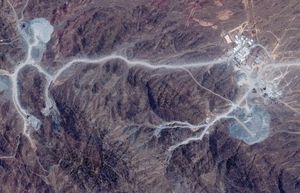
Israeli intelligence services claim that Iran has moved thousands of uranium enrichment centrifuges to a fortified complex deep inside the so-called "Pickaxe Mountain" (also known as Kolang Mountain), raising concerns that Tehran could secretly rebuild its nuclear program.
According to reports, the centrifuges were transferred to this underground facility after Israeli and American airstrikes on three of Iran's main nuclear facilities.
The complex is located near the Natanz nuclear power plant and is estimated to be built about 90 to 140 meters under granite rock, which makes it extremely difficult to destroy it with air strikes, reports WSJ .
Israeli authorities have passed this information on to the United States, while Prime Minister Benjamin Netanyahu is calling for continued military pressure on Iran.
Even US President Donald Trump has recently stated that the complex could be a potential target for future attacks.
Experts from the Institute for Science and International Security (ISIS) have observed continued activity in the area over the past 15 months, including truck movements, reinforcement of tunnel entrances, and expanded security measures.
However, there is no public evidence confirming that uranium enrichment is currently taking place at the facility.
The International Atomic Energy Agency (IAEA) has not had access to the complex and has not commented on the Israeli claims. Iran continues to insist that its nuclear program has only peaceful purposes. /Telegraph/
A plot to assassinate Turkish President Recep Tayyip Erdogan during the failed coup attempt in 2016 has been uncovered.
According to published information, the suspected perpetrators had planned to capture Erdogan at the hotel where he was staying on the night of the coup, then take him out of Turkey on a foreign plane and kill him during the flight, the media wrote.
The plan, however, failed after the Turkish president left the hotel shortly before the group of assassins arrived at the scene.
The coup attempt occurred on July 15, 2016, when a group of military officers attempted to seize control of Turkey's key institutions.
After the clash between government forces and putschists, more than 250 people lost their lives.
The Turkish government has blamed cleric Fethullah Gulen's network for orchestrating the coup, while the now-deceased imam and his supporters have denied the allegations.
The event remains one of the most important political moments in modern Turkish history. /Telegraph/
In the Kingdom of Denmark, recruitment for military service is carried out through a lottery system. After reaching the age of 18, men and women are invited for a medical examination and an assessment of their physical and psychological abilities.
Each eligible candidate draws a number at random. Those with the lowest numbers may be called up for military service if the required number of soldiers is not met by volunteers.
After the checks, recruits receive numbers that will be entered into a draw. The system works like a mathematical lottery, where lower numbers mean a greater chance of being called up, while higher numbers usually exclude the candidate from military service.
On the day of assessment, known as "Defense Day" (Forsvarets Dag), candidates who pass the health and psychological tests draw a number from a special drum. The numbers usually range from 1 to several tens of thousands.
Numbers from 1 to approximately 8000 are considered the "danger zone", as the Danish Armed Forces first send out calls for service to those with the lowest numbers. However, if there are enough volunteers, only as many recruits are called up as are needed to fill the annual quota.
People who draw high numbers are given the status of "frinummer" ("free number"). If their number is far above the army's needs, the likelihood of being called up in peacetime is practically zero, as the quota is filled much earlier.
This system aims to make the recruitment process as objective and fair as possible, as the decision does not depend on subjective assessments, but only on the result of the draw.
According to the Danish Ministry of Defense's plan, 6,500 recruits will be trained each year from 2033, about 40 percent more than at present. Denmark, with a population of about six million, has about 9,000 professional soldiers. The new rules also make it easier to accept people with diabetes and ADHD, while the Defense Minister has the power to send recruits on missions abroad if necessary.
Among the Scandinavian countries, Denmark was the last to include women in the compulsory conscription system. Norway did so in 2013, while Sweden did so in 2017. /Telegraph/
As the constitutional deadline approaches, Kosovo remains in a phase of political uncertainty regarding the formation of new institutions.
The discussions so far have not brought any epilogue, while the session for the constitution of the Assembly is expected to be convened in two weeks.
The suspension of discussions by the LDK and internal clashes on this subject, according to experts in the field, have increased uncertainty about securing the majority necessary to elect the president.
Analysts estimate that the role of PDK could be decisive at this stage. According to Sadik Zeqiri, after the divisions in LDK, there is a dilemma as to whether all 18 MPs of this entity will be willing to vote for the new president.
"If there are no talks with PDK, then the country will go to elections. LDK does not have the 18 votes, the guaranteed 18 votes for the presidential candidate," Zeqiri told RTK.
Even according to analyst Fatime Hajdari, recent developments in the LDK have deepened the political crisis in the country.
"LDK has not had internal security in controlling the vote, how many votes it has in a political collaboration. They need to have clarity. These political parties need to have responsibility and obligation to cooperate with each other," Hajdari.
Acting President Albulena Haxhiu said on Friday that the constitutive session of the Assembly will be called in early August.
The Kosovo Government has told RTK that they hope that the opposition will not barricade itself against it and that the country will go to new elections.
After the last meeting, the Democratic Party of Kosovo said they would remain in opposition, while the LDK has suspended talks, creating uncertainty about how the formation of new institutions will proceed.
The Kosovo Security Forces are continuing preparations for the deployment of its contingent to Gaza in coordination with the International Security Force headquarters. All this within the framework of the international stabilization mission in Gaza. The latest to depart for that country are 4 members of the KSF.
The United States-led peace board announced that members of the Force will support security efforts in Gaza in areas such as logistics and civil affairs.
Within the framework of this mission, the Chief of Staff of the Acting Minister of Defense, Liridona Gashi, announced that the rest of the contingent has completed operational and logistical preparations and, after final coordination with the Mission Headquarters, will depart for Gaza to assume its duties.
"The participation of the Republic of Kosovo in this mission represents an important step in consolidating its role as an active contributor to international security. This commitment also marks the first participation in a mission approved by the UN, reflecting the level of trust and partnership with international allies," said Gashi.
And those who deal with security issues say that the KSF is putting its capacities at the service of international peace and security, highlighting it as the most important moment in the consolidation of the state of Kosovo.
With this mission, the KSF is writing a historic chapter in its journey as a modern, professional force worthy of international missions. On the eve of the conclusion of the 10-year transition, this commitment demonstrates Kosovo's readiness to be part of the global security architecture and its journey towards NATO./RTK
In the midst of the summer season, Albania remains one of the favorite destinations for many foreign tourists. Even in these hot July days, many European citizens are visiting Tirana.
RTSH spoke with tourists from across the continent, from America, but also with Italian neighbors.
"I come from New York, but I am an Italian citizen. We have arrived here and Tirana seems to me to be a very beautiful place. It has changed a lot as a city and I find it interesting with the tall buildings. I will also go to the sea. The people and the city are full of life."
"For me it's not the first time. I was here in 2023. I feel part of Albania. I feel like I was born here. I live in the south of Italy and it seems to me like we are the same. When I enter the restaurant they greet me in Italian. I feel honored."
"We are here to take a tour of Albania, to then go to Montenegro. We will take with us a beautiful memory of these days and a great consideration for the Albanians," said some of the tourists.
This young man from America in Albania has not only found a beautiful place, but also his life partner, an Albanian girl.
"For me, it's not my first time in Albania, as my wife is Albanian," he said.
In May, the number of visitors to Albania was higher. According to data from INSTAT, the number of visitors accommodated in tourist structures in Albania increased by 12.4% compared to the same period a year earlier.
The hotel room occupancy rate reached 29.8%, up from 28.7% a year earlier, signaling higher utilization of accommodation capacity.
Italy remains the main market for foreign tourists with 19% of the total, followed by Kosovo with 11%, Germany with 10%, France with 9% and Poland with 6%.
The North region recorded the strongest growth in foreign visitors, from around 47 thousand to over 73 thousand, while the South region also recorded significant growth.
Four months after the Supreme Court upheld the life sentence for Dardan Krivaqen for the murder of his girlfriend, in another case of wife murder, it decided to reduce the sentence.
Edmond Lajçi was sentenced to life imprisonment in the first instance for the murder of his wife, but the same sentence was recently reduced to 30 years by the Supreme Court.
The latter justified the reduction of the sentence with the guilty plea by the convicted person.
“ The Supreme Court has assessed that the courts of first and second instance have not correctly applied Article 41 of the Criminal Code regarding the imposition of a life sentence. According to the Supreme Court’s assessment, some of the circumstances considered as particularly aggravating were not supported by evidence, while some of them constitute elements of the criminal offence itself and, for this reason, cannot justify the imposition of the most severe sentence, foreseen by law. The Supreme Court has emphasized that life imprisonment may be imposed only in cases where there are particularly aggravating circumstances that clearly distinguish the specific case from ordinary cases of the same criminal offence and when a milder sentence would not be proportionate to the gravity of the offence and the culpability of the perpetrator in this case, the Supreme Court has assessed that this legal standard has not been met. Relying on the principle of individualisation and proportionality of the sentence, as well as on the practice of the European Court of Human Rights, the Supreme Court has assessed that the sentence of 30 years "The term of imprisonment is proportional to the gravity of the criminal offense, the degree of guilt and the dangerousness of the defendant, and that this sentence can achieve the purpose of the sentence, both in terms of individual and general deterrence ," the Supreme Court's response states.
According to lawyer Yll Zekaj, judges should carefully analyze cases when deciding on a life sentence.
"Publicity should never, no external circumstances should ever, influence the Court's decision. Courts are independent, courts should act only on the basis of evidence and on the basis of what is provided by the prosecutor in the case files," said Yll Zekaj - lawyer.
Zekaj also shows that if a person remains in prison for the rest of his life, he is sentenced to life imprisonment by a final decision.
"Life imprisonment in the system we have in Kosovo does not mean that the prisoner or person sentenced to life imprisonment will never be released from prison. Our legislation, our criminal code, provides that even life imprisonment can be reviewed after 30 years of serving the sentence," said Yll Zekaj - lawyer.
Life imprisonment is the highest sentence in the Kosovo penal system. Since the entry into force of the Criminal Code in 2013, it has been imposed in over 10 cases. /Tv Dukagjini/
After the fire at the Institute of Forensic Medicine in 2023, the main laboratories were damaged and about 300 cases with toxicology results remained unfinished. According to legal experts, such delays harm judicial processes. 10 cases were sent for examination abroad, while renovations are nearing completion and the spaces are expected to be functional next week.
The lack of such a system caused everything to fall into ruins three years ago.
And now, after renovations, a modernized fire-fighting system has been installed at the Institute of Forensic Medicine.
But the 2023 fires blocked work in the main laboratory, due to the damage caused then.
Thus, there are nearly 300 cases that have not yet been concluded.
"July 2023 July 2026 there are about 1500 completed cases, completed in terms of autopsies. But there are about 300 cases awaiting toxicology results that we are hoping will be available soon after the laboratory is operational, after servicing and calibrating the equipment," said Agron Thaqi, Acting Director of the IML.
Thaci announced the number of cases that had to be sent abroad.
"In this context, sending samples abroad is also the competence of the Prosecution, around ten cases have been sent abroad. The IML has agreements with a number of regional and European institutions, so we only help with the organization and communication of the work," said Agron Thaqi, Acting Director of the IML.
However, the delay in results is estimated to affect the handling of cases by justice institutions.
"If the IML has been involved in a fire since the equipment was damaged and does not have capacity, this also hinders the judiciary, and considering that it is under the umbrella of the Ministry of Justice, the failure to empower the IML with capacity, equipment and technical capabilities is in some way a way for the government to hinder the judiciary from carrying out such work," said Gëzim Shala, Researcher at the IKL.
In addition to the delay in reviewing court cases, lawyer Ardian Bajraktari says that this also harms the state.
"Of course, this also carries a financial cost due to the fact that, as is known, any such expertise is a financial burden. From this perspective, the Ministry of Justice should make these laboratories functional as soon as possible," said Ardian Bajraktari, lawyer.
The laboratories, main autopsy room, and archive will be operational from next week, as renovations at the Institute of Forensic Medicine are almost complete.
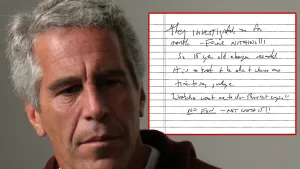
One of the women who was part of convicted sex offender Jeffrey Epstein's circle for years has spoken out in detail for the first time about the abuse she says she endured over the years. She described Epstein's system of manipulation as a "cult" from which it was almost impossible to escape.
The woman, who spoke to the BBC under the pseudonym Anya to protect her identity, said that only after Epstein's death in 2019 was she able to leave that life, which, according to her, was characterized by psychological control, sexual abuse and complete dependence on him.
"I'm still trying to accept the fact that I was abused for years. I wasn't chained or locked in a basement. The handcuffs were less visible, but they were there," Anya said.
According to her, Epstein himself described his operation as a "cult" and himself as its leader. She claims that she lived with about ten other young women in apartments financed by him, worked for him 24 hours a day and was constantly exposed to sexual abuse.
Anya says Epstein lured her with promises of a successful modeling career. After leaving Russia to work in the fashion industry and working with well-known fashion houses, she was introduced to Epstein as someone with extensive connections in the industry. She now believes she was carefully targeted from the start.
"It was a perfectly organized trap," she said, adding that the entire process was planned to gain her trust.
She says that for months, Epstein convinced her to work on her appearance, promised her meetings with important figures in the fashion world and asked for photos, including nude photos, while at the same time destroying her self-confidence by telling her she wasn't good enough.
According to her, the first sexual assault occurred while Epstein was serving a prison sentence in Florida. Later, other women in his circle told her that he was exaggerating the situation, which made her doubt her own perception of what had happened.
Over time, she became completely financially and physically dependent on Epstein. She had no bank account, could not rent an apartment, and he controlled her movements, contacts with other people, and even access to healthcare.
Anya claims that Epstein used various methods to keep the women under control. He threatened them with compromising photos and videos, forced them to write thank-you letters, and turned them against each other to break down trust between them.
One of the most difficult moments, according to her, was when he convinced her to remove a tattoo surgically by cutting the skin, instead of laser treatment, which has left visible scars even today.
She says that her greatest shame is the fact that, under pressure, she also participated in the behavior of other young girls.
"He created an entire ecosystem of abuse that served only him," Anya said, adding that she decided to speak out publicly to help other women recognize and leave abusive relationships. /Telegraph/
Europol has supported a large-scale international operation against an organised criminal network involved in the production of amphetamine in Germany and the Netherlands.
During the coordinated raids, several people were arrested and illegal drug laboratories were dismantled.
The investigation revealed that the criminal group specialized in producing large quantities of amphetamine, using clandestine laboratories and a logistics network to distribute the drug to various European countries.
Authorities seized drug production equipment, chemical substances, ready-made drugs, and other evidence related to criminal activity.
The operation was conducted with the participation of German and Dutch authorities, while Europol provided analytical and coordination support throughout the investigation.
The agency's experts helped exchange information and coordinate actions on the ground.
According to Europol, the production of synthetic drugs remains one of the most serious threats to security in the European Union.
Criminal organizations are increasingly using sophisticated laboratories and international networks to produce and distribute narcotics, making international cooperation crucial in the fight against this phenomenon. /Telegraph/
Russian oligarchs linked to the Kremlin have begun massively moving their capital abroad, in a signal that analysts say shows growing uncertainty about Russia's economic future.
According to estimates published by various sources, businessmen close to the government in Moscow are trying to protect their assets from potential risks, while the Russian economy is facing great pressure due to international sanctions, high military spending and the weakening of some economic sectors.
The oligarchs, who for years have been among the main beneficiaries of the Russian economic system, are suspected of fearing a new wave of state intervention, including taking control of private companies or transferring assets to state-linked structures.
"When even the people closest to power start to worry, it's a sign of deeper problems," Kremlin critics say, Bloomberg writes.
However, Russian authorities have repeatedly denied that the country's economy is in crisis and have stated that Russia has managed to adapt to Western sanctions.
The shift of capital by wealthier businessmen is seen as an important indicator of the climate of uncertainty, while the Russian economy continues to be dependent on state spending and the defense sector. /Telegraph/
An Iranian intermediate-range ballistic missile (IRBM) is suspected of hitting the troop accommodation area at Muwaffaq Al Salti Air Base in Jordan, where US forces are stationed.
According to preliminary reports, the strike affected the area housing military personnel. The defensive structures at this base are designed primarily for protection from shrapnel and fire, but not to withstand a direct hit from ballistic missiles.
At the moment there is no official data on the number of casualties or damage caused, but there is concern that the attack may have caused losses among American troops.
Meanwhile, Iran has carried out another attack on targets in the region, striking a power and water desalination plant in Kuwait for the second day in a row, where a fire was reported.
The attack on the water plant comes after a similar facility was hit a day earlier. Authorities believe the plants are critically important to Kuwait, as the country obtains about 90 percent of its drinking water through desalination of seawater.
The attacks are part of a broader Iranian campaign against US bases and infrastructure in the region, including Ali Al Salem Air Base in Kuwait and other military facilities.
So far, American and regional authorities have not published an official assessment of the consequences of the recent attacks. /Telegraph/
Ukrainian drones have hit the largest order processing center of Wildberries, the largest e-commerce company in Russia, in the Moscow region.
According to reports, the attack targeted one of the company's main logistics facilities, which serves as a central point for processing and distributing millions of orders across Russia.
Russian authorities did not immediately provide full details of the damage caused, while the Ukrainian side has not yet made an official statement about the operation.
Drone attacks on Russian territory have intensified in recent months, with Ukraine expanding its use of unmanned aerial vehicles to strike targets it considers linked to Russia's logistical, military and economic capabilities.
The Moscow region, including areas surrounding the Russian capital, has been hit several times by drone attacks, causing temporary disruptions and additional security measures.
Wildberries is one of the largest online sales companies in Russia and is considered the Russian equivalent of international e-commerce platforms. /Telegraph/
Europe and the United States are facing unusually high temperatures, while cities are being forced to seek new solutions to adapt to extreme heat waves.
Experts say cities should follow the example of several areas in Arizona, USA, which have faced extreme temperatures for years and have developed ways to protect residents from the intense heat.
Among the measures being considered are expanding green areas, planting more trees, using materials that reflect sunlight on buildings and roads, and creating fresh public spaces for citizens.
Heat waves in Europe have brought record temperatures, putting health services and local authorities on alert.
Scientists warn that climate change is making these episodes more frequent and intense, writes the BBC .
In many European cities, traditional urban infrastructure is proving inadequate to cope with increasingly high temperatures.
The extensive concreting and lack of green spaces create the so-called "urban heat island effect", where temperatures in cities are significantly higher than in surrounding areas.
Experts emphasize that cities must change the way they plan their cities and prepare for a hotter climate, treating protection from extreme temperatures as a public safety issue. /Telegraph/

 Login
Login